Red Light Therapy & Photobiomodulation: What Does the Research Say?
Red Light Therapy & Photobiomodulation: What Does the Research Say?
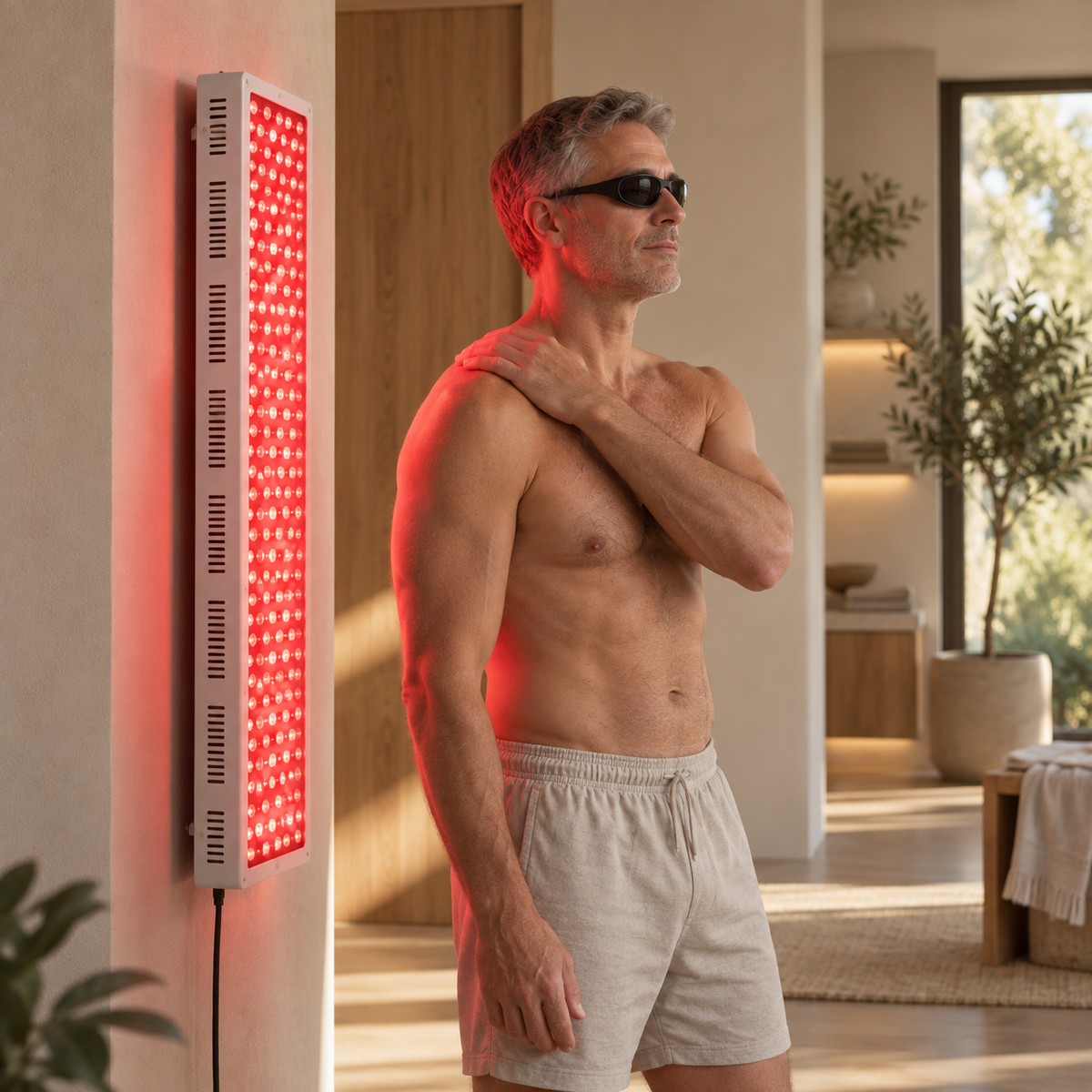
Red light therapy, also known as photobiomodulation (PBM), uses specific wavelengths of red and near-infrared light and has become increasingly common in both wellness and clinical settings.
It has been studied in areas including skin care, hair growth, exercise recovery, musculoskeletal function, and other applications. The amount and quality of evidence vary depending on the specific use.
How does photobiomodulation work?
Red and near-infrared light can penetrate tissue and interact with cellular processes involved in energy production and signaling.
Researchers are studying how this interaction may affect mitochondrial activity, oxidative stress, nitric oxide signaling, and inflammatory pathways.
These mechanisms help explain why photobiomodulation is being studied so broadly, but a biological effect does not automatically mean the same outcome will occur for every person or with every device.
Why do people use red light therapy?
People commonly use red light therapy as part of routines focused on:
- Skin care
- Hair care
- Exercise and recovery
- Musculoskeletal comfort
- General wellness
- At-home recovery practices
The experience can vary depending on the device, wavelength, treatment area, treatment distance, and frequency of use.
What is being studied?
Photobiomodulation has been studied across a wide range of applications.
A 2025 umbrella review evaluated 15 meta-analyses covering 204 randomized clinical trials and more than 9,000 participants. Researchers found statistically significant findings for several outcomes, but the overall certainty of evidence ranged from low to moderate for most applications. EasyNIH
Research has also looked more specifically at individual uses.
A 2024 systematic review and meta-analysis of randomized placebo-controlled trials examined PBM in people with knee osteoarthritis. The review found differences in some outcomes, but the authors rated the certainty of evidence as very low and emphasized the need for better-standardized treatment protocols. OUP Academic
Hair growth is another frequently studied area. The broader 2025 umbrella review found moderate-certainty evidence supporting increased hair density in androgenetic alopecia, while also noting that treatment parameters and study designs varied across trials. EasyNIH
Exercise and recovery research is also evolving. Localized photobiomodulation has been studied around exercise, while whole-body PBM remains much less established. A 2025 systematic review of whole-body PBM identified only five studies with 105 physically active participants and found no clear evidence of improved exercise performance or recovery measures, although some studies reported changes in sleep-related outcomes. Red Light Therapy Find
Why wavelength and dose matter
Not all red light devices are the same.
Research uses different:
- Wavelengths
- Light intensities
- Treatment distances
- Session lengths
- Treatment frequencies
- Treatment areas
Because of those differences, results from one study or one device should not automatically be applied to every red light product.
This is one of the most important things to understand when evaluating photobiomodulation: the specific device and treatment protocol matter.
What is still being learned?
Researchers are continuing to study:
- Which wavelengths are best suited to different applications
- Optimal treatment duration and frequency
- Differences between localized and whole-body treatment
- Long-term outcomes
- How consumer devices compare with devices used in clinical studies
- Which applications are most likely to produce meaningful results
Photobiomodulation has a substantial and growing research base, but there is still no single standardized protocol that applies across all uses.
Practical considerations
Follow the manufacturer’s instructions for treatment distance, session length, frequency, and eye protection.
Eye protection may be recommended depending on the device and treatment area.
People with photosensitivity or concerns about using light therapy over a particular area should discuss use with a healthcare professional when appropriate.
The bottom line
Red light therapy is a widely studied form of photobiomodulation with growing interest across wellness, recovery, and clinical research.
The most useful way to evaluate it is not simply to ask whether “red light works,” but to consider the specific application, wavelength, dose, device, and treatment protocol being used.
For people who enjoy incorporating red light therapy into a wellness or recovery routine, choosing an appropriate device and using it consistently according to manufacturer guidance is an important part of the process.
References
Effects of photobiomodulation on multiple health outcomes: an umbrella review of randomized clinical trials. 2025. Review of 15 meta-analyses, 204 randomized trials, and more than 9,000 participants. EasyNIH
Oliveira S, et al. Effectiveness of Photobiomodulation in Reducing Pain and Disability in Patients With Knee Osteoarthritis: A Systematic Review With Meta-Analysis. Physical Therapy. 2024. OUP Academic
Systematic review on whole-body photobiomodulation for exercise performance and recovery. 2025. Five studies involving 105 physically active participants. Red Light Therapy Find
The 2025 umbrella review above also incorporated randomized-trial evidence involving androgenetic alopecia, fibromyalgia, knee osteoarthritis, burning mouth syndrome, and cognitive outcomes, providing a broader overview of where PBM has been studied and where evidence remains less certain. EasyNIH
Vital Reform House provides educational information only. This content is not medical advice and is not intended to diagnose, treat, cure, or prevent disease.
Absolutely. Here is the full revised Red Light Therapy & Photobiomodulation post, with the stronger reference base incorporated so you can replace the existing copy in one shot.
Red Light Therapy & Photobiomodulation: What Does the Research Say?
Red light therapy, also known as photobiomodulation (PBM), uses specific wavelengths of red and near-infrared light and has become increasingly common in both wellness and clinical settings.
It has been studied in areas including skin care, hair growth, exercise recovery, musculoskeletal function, and other applications. The amount and quality of evidence vary depending on the specific use.
How does photobiomodulation work?
Red and near-infrared light can penetrate tissue and interact with cellular processes involved in energy production and signaling.
Researchers are studying how this interaction may affect mitochondrial activity, oxidative stress, nitric oxide signaling, and inflammatory pathways.
These mechanisms help explain why photobiomodulation is being studied so broadly, but a biological effect does not automatically mean the same outcome will occur for every person or with every device.
Why do people use red light therapy?
People commonly use red light therapy as part of routines focused on:
- Skin care
- Hair care
- Exercise and recovery
- Musculoskeletal comfort
- General wellness
- At-home recovery practices
The experience can vary depending on the device, wavelength, treatment area, treatment distance, and frequency of use.
What is being studied?
Photobiomodulation has been studied across a wide range of applications.
A 2025 umbrella review evaluated 15 meta-analyses covering 204 randomized clinical trials and more than 9,000 participants. Researchers found statistically significant findings for several outcomes, but the overall certainty of evidence ranged from low to moderate for most applications. EasyNIH
Research has also looked more specifically at individual uses.
A 2024 systematic review and meta-analysis of randomized placebo-controlled trials examined PBM in people with knee osteoarthritis. The review found differences in some outcomes, but the authors rated the certainty of evidence as very low and emphasized the need for better-standardized treatment protocols. OUP Academic
Hair growth is another frequently studied area. The broader 2025 umbrella review found moderate-certainty evidence supporting increased hair density in androgenetic alopecia, while also noting that treatment parameters and study designs varied across trials. EasyNIH
Exercise and recovery research is also evolving. Localized photobiomodulation has been studied around exercise, while whole-body PBM remains much less established. A 2025 systematic review of whole-body PBM identified only five studies with 105 physically active participants and found no clear evidence of improved exercise performance or recovery measures, although some studies reported changes in sleep-related outcomes. Red Light Therapy Find
Why wavelength and dose matter
Not all red light devices are the same.
Research uses different:
- Wavelengths
- Light intensities
- Treatment distances
- Session lengths
- Treatment frequencies
- Treatment areas
Because of those differences, results from one study or one device should not automatically be applied to every red light product.
This is one of the most important things to understand when evaluating photobiomodulation: the specific device and treatment protocol matter.
What is still being learned?
Researchers are continuing to study:
- Which wavelengths are best suited to different applications
- Optimal treatment duration and frequency
- Differences between localized and whole-body treatment
- Long-term outcomes
- How consumer devices compare with devices used in clinical studies
- Which applications are most likely to produce meaningful results
Photobiomodulation has a substantial and growing research base, but there is still no single standardized protocol that applies across all uses.
Practical considerations
Follow the manufacturer’s instructions for treatment distance, session length, frequency, and eye protection.
Eye protection may be recommended depending on the device and treatment area.
People with photosensitivity or concerns about using light therapy over a particular area should discuss use with a healthcare professional when appropriate.
The bottom line
Red light therapy is a widely studied form of photobiomodulation with growing interest across wellness, recovery, and clinical research.
The most useful way to evaluate it is not simply to ask whether “red light works,” but to consider the specific application, wavelength, dose, device, and treatment protocol being used.
For people who enjoy incorporating red light therapy into a wellness or recovery routine, choosing an appropriate device and using it consistently according to manufacturer guidance is an important part of the process.
References
Effects of photobiomodulation on multiple health outcomes: an umbrella review of randomized clinical trials. 2025. Review of 15 meta-analyses, 204 randomized trials, and more than 9,000 participants. EasyNIH
Oliveira S, et al. Effectiveness of Photobiomodulation in Reducing Pain and Disability in Patients With Knee Osteoarthritis: A Systematic Review With Meta-Analysis. Physical Therapy. 2024. OUP Academic
Systematic review on whole-body photobiomodulation for exercise performance and recovery. 2025. Five studies involving 105 physically active participants. Red Light Therapy Find
The 2025 umbrella review above also incorporated randomized-trial evidence involving androgenetic alopecia, fibromyalgia, knee osteoarthritis, burning mouth syndrome, and cognitive outcomes, providing a broader overview of where PBM has been studied and where evidence remains less certain. EasyNIH
Vital Reform House provides educational information only. This content is not medical advice and is not intended to diagnose, treat, cure, or prevent disease.