Cold Water Immersion: What Does the Research Say?
Cold Water Immersion: What Does the Research Say?
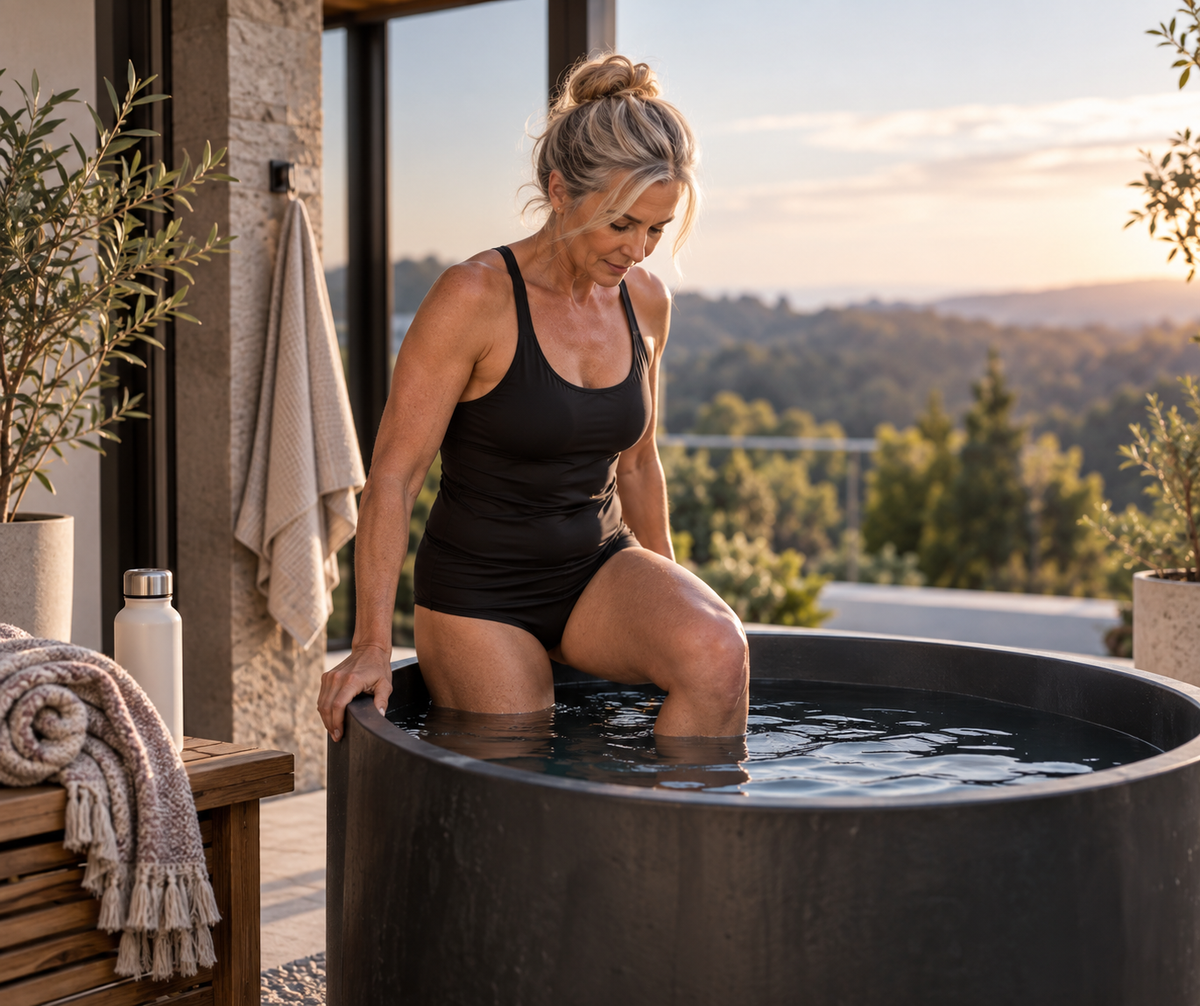
Cold water immersion, often called a cold plunge or ice bath, involves exposing part or all of the body to cold water for a short period of time.
It has long been used in athletic recovery and has become increasingly popular in general wellness routines. Researchers are studying how cold exposure affects recovery, stress response, sleep, cardiovascular function, and other aspects of well-being.
How does cold water immersion affect the body?
Cold water creates an immediate physiological response.
Blood vessels near the skin constrict, heart rate and blood pressure can change, and the nervous system responds quickly to the drop in temperature. Sudden immersion can also produce a cold-shock response, which may include rapid breathing or gasping.
A 2024 systematic review and meta-analysis examined cardiovascular and autonomic responses to cold exposure in healthy adults, demonstrating that cold-water immersion produces measurable short-term changes in cardiovascular regulation. PubMed
These responses are part of the reason cold immersion is being studied across both sports recovery and general wellness.
Why do people use cold plunges?
People commonly use cold water immersion as part of routines focused on:
- Post-exercise recovery
- Muscle soreness
- Cooling after strenuous activity
- General wellness
- Stress-management routines
- Personal preference for cold exposure
The experience can vary substantially depending on water temperature, immersion depth, session length, and frequency of use.
What is being studied?
Cold water immersion has been researched most extensively in relation to exercise and recovery.
A systematic review and meta-analysis of 44 studies found that cold-water immersion was associated with lower perceived muscle soreness after exercise across a variety of protocols, although results varied by timing and type of exercise. PubMed
Another systematic review involving 28 studies found that cold-water immersion performed similarly to or better than several other recovery strategies for some measures of post-exercise recovery, while results for strength, power, and flexibility were more mixed. PubMed
A larger review of 68 studies found that the effect of cold-water immersion depended heavily on when recovery was measured and what type of exercise came before it. Some measures of soreness and perceived recovery improved, while some short-term sprint and jumping performance measures were temporarily lower after immersion. PubMed
More recent research continues to reinforce that cold immersion does not produce one universal recovery response. A 2026 review of post-exercise hot- and cold-water immersion found inconsistent effects across soreness, perceived recovery, biochemical markers, and performance outcomes. PubMed
What about general health and wellbeing?
Research outside athletic recovery is newer.
A 2025 systematic review and meta-analysis evaluated cold showers, ice baths, and cold-water immersion in healthy adults. Eleven studies involving more than 3,100 participants were included.
Researchers observed time-dependent changes in stress and some measures of sleep and quality of life. They did not find consistent effects across mood, immunity, or other commonly promoted outcomes, and the authors emphasized that the evidence remains limited by small studies and varied protocols. PLOS
This is important because many popular claims about cold plunges extend beyond what current research can establish.
Temperature, duration, and timing matter
Cold immersion protocols vary widely.
Research studies differ in:
- Water temperature
- Duration of immersion
- Depth of immersion
- Frequency of use
- Timing in relation to exercise
- Fitness and health of participants
Because of those differences, there is no single cold-plunge protocol that can be assumed to produce the same result for everyone.
Colder or longer is also not necessarily better.
What is still being learned?
Researchers continue to study:
- Optimal water temperature
- Ideal session length
- How often cold immersion should be used
- How timing affects exercise recovery
- Differences between athletes and the general population
- Long-term effects of regular cold exposure
- Individual differences in response and tolerance
Cold water immersion has a meaningful research base, particularly in sports recovery, but many broader wellness applications are still being investigated.
Practical considerations
Cold water can produce a strong response, particularly during the first moments of immersion.
Beginners may prefer to start with shorter exposure and less extreme temperatures rather than immediately using very cold water.
Because cold immersion can temporarily affect breathing, heart rate, and blood pressure, people with cardiovascular conditions, blood-pressure concerns, heart-rhythm disorders, or other medical conditions should discuss cold exposure with a healthcare professional when appropriate.
Cold-water immersion should also be used in an environment where someone can safely enter and exit the water.
The bottom line
Cold water immersion is an established recovery practice with a growing role in wellness routines.
Research is strongest around exercise recovery and muscle soreness, while broader areas such as stress, sleep, and general well-being continue to be studied.
For people who enjoy cold exposure, a practical approach is to choose a temperature and duration that feels manageable, use the equipment according to manufacturer guidance, and view cold immersion as one optional part of a broader wellness routine.
References
Cain T, Brinsley J, Bennett H, Nelson M, Maher C, Singh B. Effects of cold-water immersion on health and wellbeing: A systematic review and meta-analysis. PLOS ONE. 2025. Eleven studies involving 3,177 adults. PLOS
Jdidi H, et al. The effects of cold exposure on cardiovascular and cardiac autonomic control responses in healthy individuals: A systematic review, meta-analysis and meta-regression. Journal of Thermal Biology. 2024. PubMed
Moore E, et al. What Parameters Influence the Effect of Cold-Water Immersion on Muscle Soreness? An Updated Systematic Review and Meta-Analysis. 2022. Forty-four studies evaluating post-exercise muscle soreness. PubMed
Effects of Cold-Water Immersion Compared With Other Recovery Modalities on Athletic Performance Following Acute Strenuous Exercise: A Systematic Review, Meta-Analysis, and Meta-Regression. 2023. Twenty-eight studies evaluating recovery outcomes. PubMed
The effect of cold water immersion on the recovery of physical performance revisited: A systematic review with meta-analysis. 2023. Sixty-eight studies examining recovery at multiple time points after exercise. PubMed
Effects of post-exercise hot and cold-water immersion on performance recovery and physiological markers in athletes: a systematic review. 2026. PubMed
Vital Reform House provides educational information only. This content is not medical advice and is not intended to diagnose, treat, cure, or prevent disease.